
Ann Arbor Mold Remediation
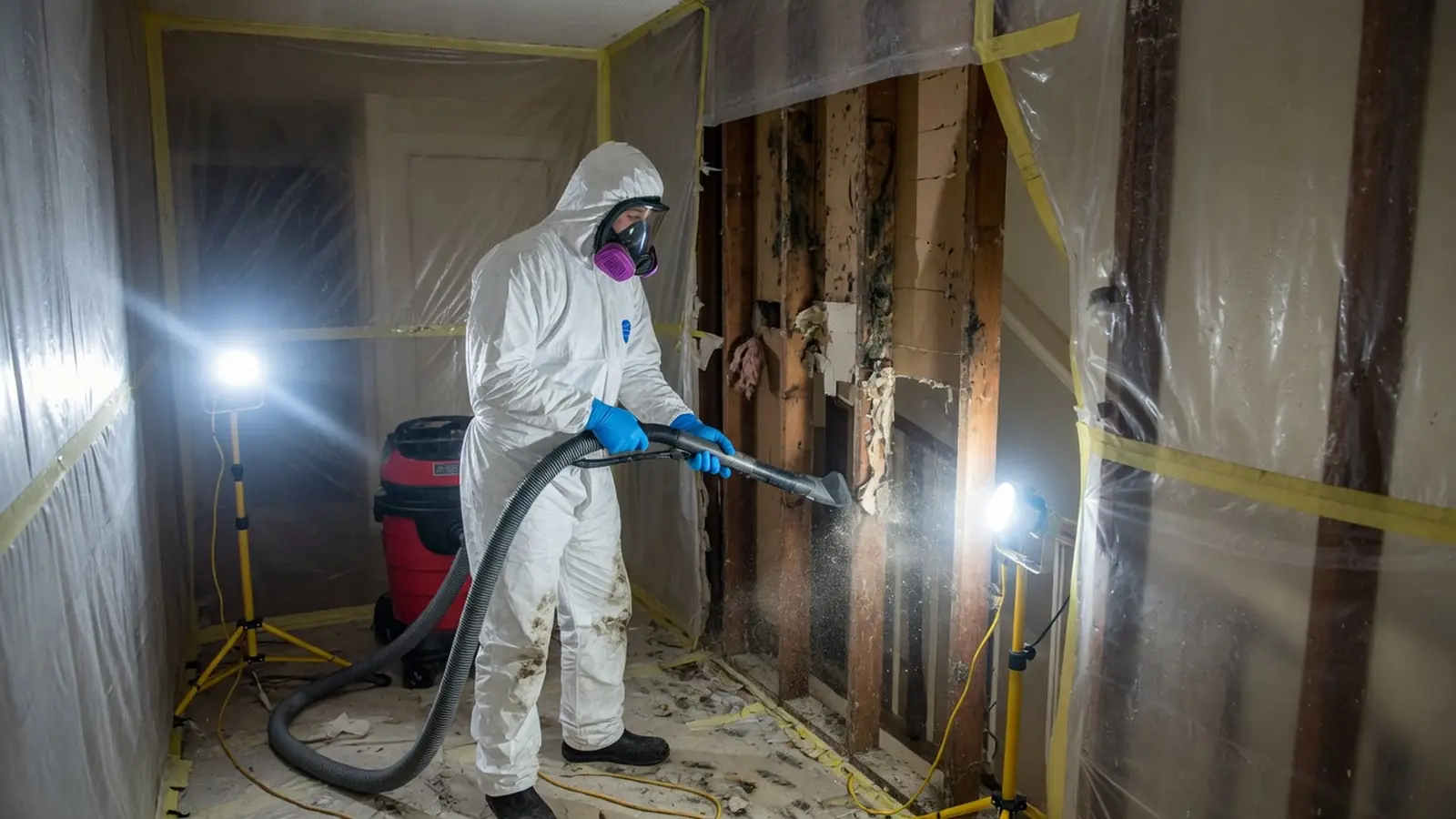
When water intrusion triggers microbial colonies behind drywall and subflooring, prompt containment protects indoor living spaces. Our remediation specialists isolate affected rooms under negative air pressure, remove damaged materials, and eliminate hidden structural dampness. We restore healthy, moisture-free conditions to your property with complete clinical precision.
Call (734) 555-0132 after you've shut the water off, or call first and we'll walk you through it.
Prefer to talk? (734) 555-0132
Restoring Safe Indoor Air Quality
About 76% of housing units locally (40,697 of 53,636) were built before 1980, the period when asbestos-containing materials and lead paint were still in use.
The median owner-occupied home locally was built in 1971 (Census ACS 5-year), meaning vintage building materials and settling foundations are common across Kerrytown and Water Hill.
A recurring challenge noted by property inspectors is that homebuyers and residents struggle to distinguish between normal regional groundwater dampness and severe foundation drainage failure causing chronic basement water intrusion.
A common pattern echoed in public discussions is that homeowners planning basement finishing projects encounter efflorescence, seasonal groundwater seepage, and latent mold that threaten framing and finished flooring.
Our technicians provide comprehensive structural water extraction and moisture mitigation services to protect framing before finishes are installed.
Every remediation follows strict physical isolation protocols to guarantee disturbed fungal particles never migrate into clean living quarters.
Systematic Containment And Removal
When heavy storms saturate regional soils, our technicians provide emergency basement flooding cleanup and rapid extraction to halt fungal colonization. Homeowners often describe how, after a primary sump pump mechanical failure floods a finished basement, homeowners face urgent decisions regarding rapid water extraction, drying protocols, and gutting soaked drywall and carpet.
- Inspection And Structural Moisture Mapping. We deploy thermal imaging and calibrated pinless moisture meters to map damp structural cavities across basements and crawl spaces. Identifying hidden moisture pathways behind vintage baseboards ensures targeted extraction before microbial growth spreads.
- Negative-Air Isolation And Containment. Professional remediation crews isolate contaminated rooms with polyethylene barriers and negative air scrubbers to prevent disturbed spores from spreading into HVAC ductwork. Critical isolation zones maintain depressurization so exhaust air is vented safely outside the building envelope.
- Selective Demolition And Spore Extraction. While structural timber framing can often be wire-brushed and encapsulated with antimicrobial sealant, contaminated porous drywall and fiberglass insulation require complete removal. Porous items holding heavy microbial growth are sealed in thick disposal bags inside containment before removal.
- Dehumidification And Clearance Verification. Industrial LGR dehumidifiers and high-velocity air movers extract deep core dampness until wood framing drops below fifteen percent moisture content. We conduct final visual and air quality clearance evaluations before containment barriers are taken down.
Rigorous Remediation Protocols
In local property forums, older home owners struggle to evaluate conflicting professional remediation estimates between dry-ice blasting and botanical treatments for active attic and basement mold. We provide transparent assessments that clearly detail why mechanical brushing, botanical antimicrobial washes, or abrasive methods are appropriate for your specific framing conditions. When winter pipe bursts saturate subfloors and wall cavities, our crew handles mitigating moisture from burst frozen pipes under strict containment protocols.
Basement Mold Remediation
We eliminate fungal growth caused by chronic foundation dampness, groundwater seepage, and seasonal humidity. Contaminated materials are removed under negative pressure, and structural joists are treated with antimicrobial sealant.
Attic Mold Mitigation
Poor attic ventilation and roof deck condensation create prime conditions for aggressive mold expansion. Our technicians safely access rafters to wire-brush sheathing, treat wood surfaces, and ensure clean indoor air.
Crawl Space Decontamination
Exposed dirt floors and high soil moisture release damp air directly into subflooring. We clean contaminated joists, install durable vapor barriers, and stabilize humidity to prevent recurring fungal infestations.
Our Commitment To Quality Remediation Work
We approach every microbial remediation project with certified containment protocols, clinical precision, and complete structural moisture verification to safeguard indoor air quality.
- 12Zip Codes Served
- 6Service Areas
- 3Services Offered
Here is what local homeowners say about our prompt communication, clean containment, and certified mold remediation standards.
“The crew sent detailed photo updates twice daily while removing damp subflooring from our Kerrytown basement. We never had to call to ask what was happening or when the dehumidification equipment would finish. Their daily moisture logs gave us total confidence in the cleanup.”
David K.
“During our remodel in Burns Park, the team handled every required safety protocol and environmental inspection right from day one. Their documentation passed local code review on the initial submission without delays. Having experienced professionals handle the paperwork relieved so much stress.”
Sarah M.
“Our basement had sudden water seepage late on a Saturday night, and the crew answered right away to guide our immediate shutoff steps. A lead technician came out early Sunday morning with moisture meters to check behind our drywall. That rapid weekend response prevented mold from spreading throughout our lower level.”
Marcus T.
“When the team finished treating the exposed wall framing, the wire-brushing was remarkably clean and the antimicrobial sealant was applied evenly across every joint and seam. They cut the sheetrock along laser-straight lines, leaving perfectly squared edges for our repair contractor. The craftsmanship and neat containment work were exceptional.”
Elena R.
Frequently Asked Questions
Does spraying household bleach on damp basement drywall kill active mold colonies?
Spraying household bleach on damp drywall fails to kill active mold colonies because surface chlorine evaporates while moisture feeds fungal roots. Does spraying household bleach on damp basement drywall kill active mold colonies, or does moisture penetration actually accelerate fungal regrowth inside the wall? Household bleach remains on the non-porous surface while water penetrates porous sheetrock, nourishing fungal hyphae embedded deep in the wall.
How do remediation crews prevent mold spores from spreading into home HVAC systems?
Remediation crews isolate work zones with sealed polyethylene barriers and operate negative-air HEPA scrubbers to exhaust disturbed spores outside. Critical barriers seal off return vents, door thresholds, and supply registers. Continuous negative pressure ensures airborne particulates cannot enter ductwork or circulate through living areas.
Can structural timber framing be saved after severe moisture and fungal contamination?
Structural wood framing can usually be preserved through wire-brushing and antimicrobial encapsulation, but saturated drywall requires removal. Because timber retains load-bearing strength once surface hyphae are removed and moisture levels drop below fifteen percent, porous insulation and gypsum are discarded while framing is sanitized.
How long does professional residential mold remediation typically take to complete?
Professional residential mold remediation typically requires one to three days for physical containment, selective removal, and deep drying. Small isolated bathroom or closet areas can be completed within 24 to 48 hours, whereas extensive basement flood remediation requiring prolonged dehumidification may take several days.
What warning signs indicate moisture issues before finishing a basement space?
White efflorescence mineral deposits, damp concrete odors, and high seasonal humidity indicate groundwater intrusion that must be resolved. Homeowners planning basement finishing projects encounter efflorescence, seasonal groundwater seepage, and latent mold that threaten framing and finished flooring if not corrected beforehand.