
Residential Water Damage Restoration Ann Arbor MI
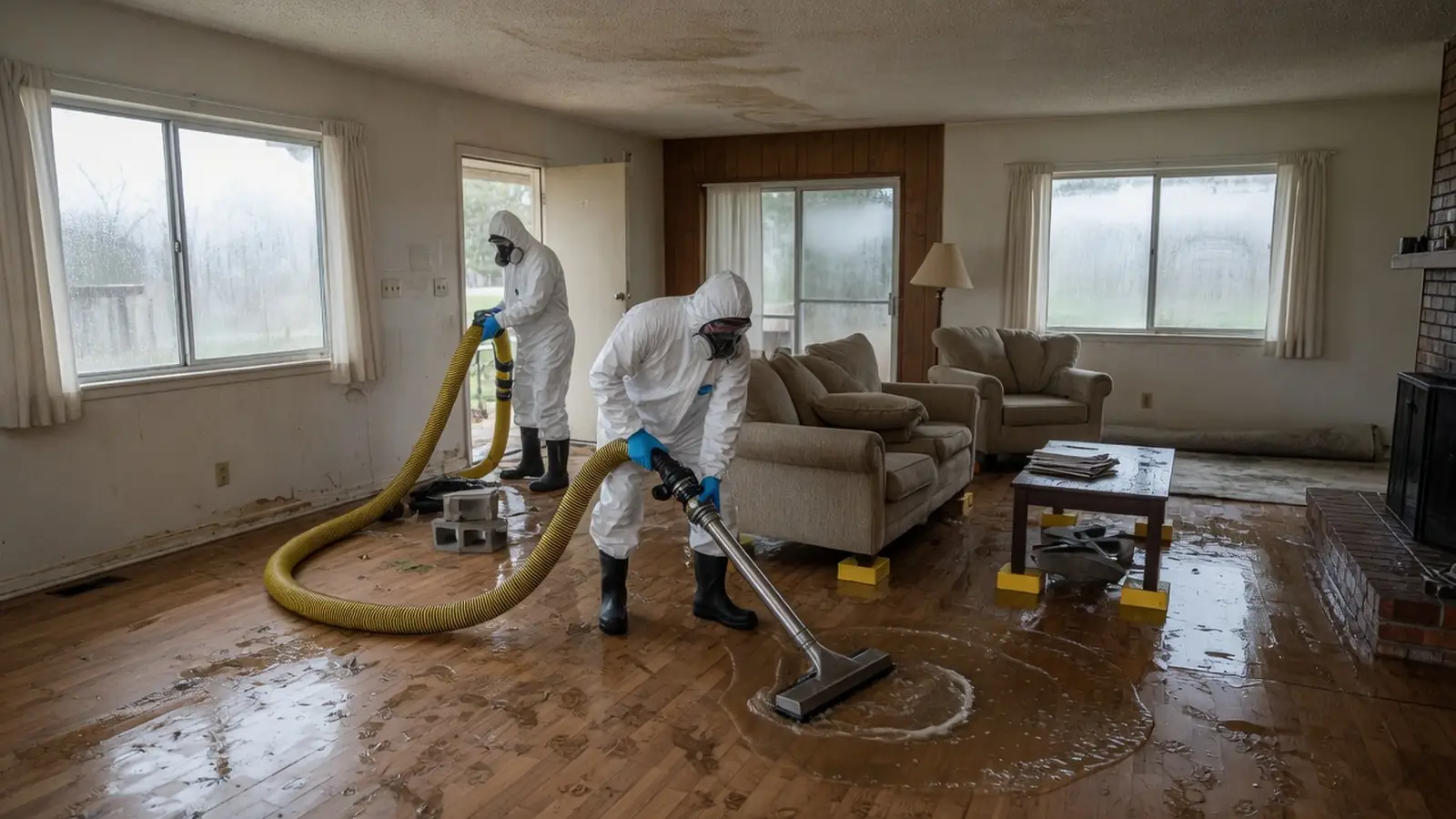
Effective flood remediation requires an integrated scope addressing structural drying, damage restoration, and full reconstruction. When sudden pipe failures or seasonal storms inundate residential interiors, our certified crews respond immediately with heavy-duty extraction and targeted drying systems. We protect your home from mold proliferation and restore structural framing to pristine pre-loss standards.
If water is moving right now, call (734) 555-0132. We'll help you find the shutoff first.
Prefer to talk? (734) 555-0132
Affordable Water Damage Restoration Services
About 31% of housing units in the local municipality (16,450 of 53,636) were built before 1960, the era of galvanized steel supply lines and cast iron drains that now suffer sudden plumbing failures.
About 18% of housing units locally (9,783 of 53,636) were built in the 1960s, overlapping the years aluminium branch wiring was installed that requires extra caution during water extraction.
About 27% of housing units in the area (14,464 of 53,636) were built in the 1970s and 1980s, overlapping the years polybutylene supply piping was commonly installed and prone to rupture.
Our certified technicians move fast to mitigate severe basement flooding before structural framing absorbs moisture and warps.
Homebuyers and residents struggle to distinguish between normal regional groundwater dampness and severe foundation drainage failure causing chronic basement water intrusion.
We deploy commercial desiccant dehumidifiers and high-volume axial air movers to dry saturated floor joists down to baseline structural equilibrium.
Thermal imaging cameras and non-penetrating moisture meters guide our daily monitoring to verify complete hidden moisture removal behind baseboards.
Our Proven Water Mitigation Protocol
A pattern echoed in public discussions is that homeowners experiencing active foundation wall leaks are unsure whether to address exterior grading and downspout extensions first or invest in costly interior waterproofing systems. We begin with comprehensive inspection and moisture mapping to isolate the intrusion source before deploying targeted extraction equipment.
- Emergency Water Extraction And Assessment. After a primary sump pump mechanical failure floods a finished basement, homeowners face urgent decisions regarding rapid water extraction, drying protocols, and gutting soaked drywall and carpet. We immediately pump out standing water and inspect incoming lines, providing immediate support including emergency response for ruptured winter supply lines and frozen pipes.
- Environmental Containment And Safety Testing. About 76% of housing units across our community (40,697 of 53,636) were built before 1980, the period when asbestos-containing materials and lead paint were still in use. Our technicians establish negative-air containment barriers and execute certified environmental testing before disturbing damp drywall, plaster, or vinyl tile.
- Industrial Structural Drying And Stabilization. The single most extensive soil unit mapped around our district is Wawasee loam, 2 to 6 percent slopes, covering about 33,376 acres of MI161. Heavy subsoil moisture increases indoor humidity during basement floods, so we position industrial LGR dehumidifiers and high-velocity air movers to extract deep moisture from structural joists.
- Full Damage Restoration And Reconstruction. Completing recovery demands restoring structural integrity, replacing damaged subflooring, and rebuilding drywall assemblies. Effective flood remediation requires an integrated scope addressing structural drying, damage restoration, and full reconstruction to return your property to safe living condition.
Guaranteed Emergency Flood Cleanup
The dominant mapped soils across our regional soil survey area (MI161) by acreage are Wawasee loam, 2 to 6 percent slopes; Glynwood loam, 2 to 6 percent slopes; Houghton muck, 0 to 1 percent slopes; Blount loam, 2 to 6 percent slopes. These dense, slow-draining soil formations retain surface runoff, elevating basement vulnerability during severe storms. We deliver uncompromising workmanship using calibrated psychrometric logging to verify that every wall cavity reaches dry standard before reconstruction begins.
Basement Water Extraction
NOAA radar recorded 985 hail signatures within about 15 miles of our regional center between 2021-2025 (2021: 78, 2022: 119, 2023: 351, 2024: 304, 2025: 133). Severe storm downpours frequently overwhelm residential storm sumps, demanding rapid truck-mounted extraction to prevent foundation wood rot.
Storm Damage And Roof Leak Recovery
The heaviest recent hail year around our district was 2023, with 351 radar hail signatures inside a 15-mile radius. Hail impact compromises roof flashing and shingles, driving cascading attic water into ceilings and insulation that our crews quickly extract and sanitize.
Structural Drying And Reconstruction
Effective flood remediation requires an integrated scope addressing structural drying, damage restoration, and full reconstruction. Our team replaces compromised drywall, repairs water-damaged framing, and repaints finishes to ensure complete pre-loss recovery.
Our Commitment To Emergency Property Restoration
We approach water damage recovery with strict structural drying protocols and transparent communication. Every home receives thorough moisture mapping, prompt extraction, and complete stabilization to protect your living environment.
- 10Zip Codes Served
- 6Service Areas
- 3Services Offered
Homeowners rely on our emergency drying and structural recovery specialists when sudden water intrusion threatens their property. Read verified feedback from local property owners about our workmanship, honest communication, and transparent service.
“When the crew rebuilt our water-damaged subfloor and drywall, the taped seams and baseboard joints lined up seamlessly. They leveled the framing under our replacement flooring so thoroughly that you cannot tell where the flood cut was made. Their attention to structural alignment was outstanding.”
Bradley K.
“The written estimate we received on day one matched the final invoice down to the exact dollar amount. The team explained every line item for extraction and drying before starting, with zero surprise change fees at completion. Finding that level of billing integrity during an emergency was a huge relief.”
Noreen S.
“Every evening before packing up, the crew vacuumed the work zone and stacked their containment barriers neatly out of our hallway. They hauled away all contaminated trash daily and left our living space completely tidy while the air movers ran. Having our home respected like that made a stressful situation manageable.”
Julian M.
“Moisture meter readings and photo logs arrived on my phone every morning by eight o'clock without me ever having to ask. The lead technician sent clear daily updates explaining the drying curve and what steps were next. Their proactive communication kept our family calm throughout the whole restoration.”
Corinne H.
Frequently Asked Questions
How quickly does professional structural drying take to complete after indoor flooding?
Complete structural drying typically takes three to five days using industrial dehumidifiers and air movers depending on moisture saturation. Technicians monitor relative humidity, ambient temperature, and wood moisture levels daily to establish balanced drying conditions.
What immediate steps should be taken if a primary sump pump fails during heavy rainfall?
Homeowners should immediately disconnect power safely, extract standing water, and remove soaked carpet before microbial growth starts. Calling emergency water mitigation professionals ensures wet drywall is cut away and cavities are sanitized quickly.
Why do older regional homes experience frequent supply line leaks and drain failures?
Homes constructed before 1960 frequently experience catastrophic pipe failures due to the natural corrosion of aging galvanized steel lines. Over decades, mineral buildup narrows water pathways until structural wall pressure ruptures joint connections.
How do local soil profiles contribute to recurrent basement moisture problems?
Dense clay loam deposits expand when wet, creating hydrostatic pressure against foundation walls that forces water through masonry joints. Without proper exterior grading or foundation tile relief, subsurface water pools directly against basement footings.
What testing is required before tearing out wet walls in older properties?
Properties built prior to 1980 require specialized testing for lead paint and asbestos before technicians disrupt wet structural materials. Certified containment practices isolate hazardous fibers, preventing toxic distribution through your living space.