
Ann Arbor Basement Flooding
Basement flooding threatens structural integrity and creates immediate health concerns for property owners. In regional discussions, homeowners weigh the risks of catastrophic water damage and insurance coverage gaps caused by mechanical sump pump failures and municipal sewer backups during heavy downpours. Our emergency crews arrive immediately with truck-mounted extraction equipment and industrial dehumidifiers to dry your home safely.
Call (734) 555-0132 to have the area inspected and the source found.
Prefer to talk? (734) 555-0132
Dedicated Basement Water Removal
Persistent moisture across low-lying properties near the Huron River creates difficult subterranean challenges for local property owners.
As homeowners often describe in local community forums, homebuyers and residents struggle to distinguish between normal regional groundwater dampness and severe foundation drainage failure causing chronic basement water intrusion.
Our field crews provide comprehensive residential water damage restoration focused on rapid containment and structural stabilization.
We inspect porous block masonry and fieldstone foundations using calibrated thermal cameras and non-invasive moisture meters.
Every project follows rigorous sanitation standards to eliminate contaminated groundwater deposits before mechanical dehumidification begins.
We treat every home with personal care and maintain direct communication from initial pump-out through complete moisture clearance.
Our Flooded Basement Restoration Steps
A pattern echoed in public discussions is that severe downpours cause rapid basement flooding when failing sump pumps, overflowing gutters, and clogged egress window wells are not detected and cleared in time.
- Emergency Site Assessment And Hazard Containment. After a primary sump pump mechanical failure floods a finished basement, homeowners face urgent decisions regarding rapid water extraction, drying protocols, and gutting soaked drywall and carpet. Our technicians immediately isolate electrical risks, establish containment zones, and catalog moisture saturation boundaries.
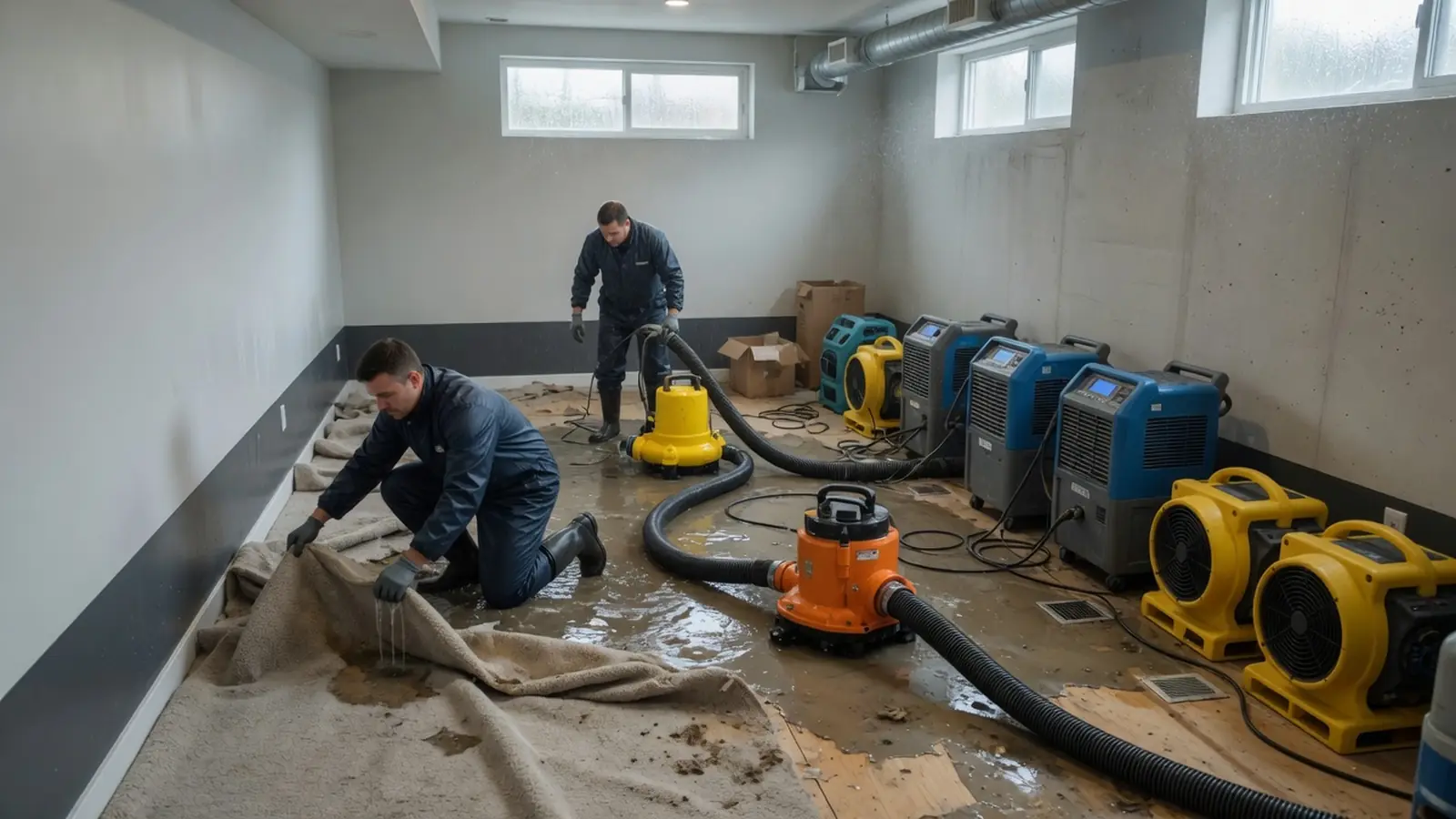
- High-Volume Standing Water Extraction. We deploy submersible trash pumps and truck-mounted suction units to eliminate standing floodwaters from subterranean floors. Extracting bulk water quickly prevents prolonged hydrostatic pooling and preserves concrete subflooring.
- Structural Drying And Dehumidification. Industrial desiccant dehumidifiers and high-velocity axial air movers pull trapped dampness out of wall framing and concrete slabs. Once extraction is complete, we initiate containment and mold remediation protocols to eliminate hidden airborne spores before rebuilding.
- Sanitization And Prevention Inspection. We treat affected structural studs and foundation walls with botanical antimicrobial solutions to neutralize bacterial residues. When winter sub-zero temperatures arrive, repairing burst water pipes from frozen lines prevents recurring structural flooding.
Rapid Protection For Subterranean Spaces
As trade video analyses consistently demonstrate, immediate 24/7 crew and equipment mobilization is critical during flood emergencies to halt compounding damage and minimize downtime. Our workmanship adheres strictly to professional structural drying standards without cutting corners on moisture discovery. We do not stop until thermo-hygrometer readings confirm that humidity levels throughout the foundation have returned to dry equilibrium.
Pre-Remodel Moisture Abatement
Homeowners planning basement finishing projects encounter efflorescence, seasonal groundwater seepage, and latent mold that threaten framing and finished flooring. We test masonry vapor emission and treat active dampness so your lower level renovations remain durable.
Emergency Sump Pump Failure Cleanup
When primary pump switches stick or power outages strike during storms, water accumulates over finished floors. Our emergency teams remove pooled discharge, sanitize subfloors, and implement heavy structural dehumidification.
Foundation Seepage And Drainage Relief
Homeowners experiencing active foundation wall leaks are unsure whether to address exterior grading and downspout extensions first or invest in costly interior waterproofing systems. We trace subterranean water pathways and provide honest evaluations to resolve intrusive pressure points.
Dedicated Moisture Control And Mitigation
We approach every flooded basement with a focus on scientific drying principles and rapid moisture stabilization. Our technicians measure ambient relative humidity and substrate equilibrium to ensure that hidden structural cavities are completely dry before equipment is cleared.
- 10Zip Codes Served
- 4Service Areas
- 3Services Offered
Local homeowners rely on our dedicated mitigation specialists when severe storms or mechanical pump failures flood their basements. Here is what property owners share about working with our team.
“Another contractor offered a lowball estimate that only covered vacuuming up surface water and leaving box fans. The crew explained why leaving soaked drywall would spark mold growth and handled complete structural drying instead. Taking their thorough approach saved our finished basement from long-term framing rot.”
Marcus G.
“When our lower level flooded, the technicians showed us why replacing organic pad with closed-cell underlayment would stop future seepage issues. They walked us through material selections that lowered our replacement costs while dramatically increasing moisture resistance. The new setup gave us genuine confidence during subsequent rainstorms.”
Elena V.
“Severe thunderstorms washed out power across our street while our foundation was actively taking in runoff. The team immediately rolled in mobile generators and extra commercial extractors to keep the water from rising higher. They stayed until midnight to make up for lost time and stabilized the entire space before sunrise.”
David K.
“Our shared driveway setup created real friction with our next-door neighbor when large equipment vans arrived. The crew politely explained the staging plan, routed heavy discharge hoses along the rear perimeter, and kept the shared lane completely unobstructed. It kept our neighborhood peaceful during a chaotic emergency.”
Rachel P.
Frequently Asked Questions
How quickly should professional water extraction begin after basement flooding occurs?
Professional water extraction should start within 24 to 48 hours to prevent microbial growth and stop progressive structural deterioration. Rapid response halts humidity migration into subflooring and framing, minimizing the total demolition required.
What is the average cost to extract water and dry out a flooded basement?
Basement water extraction and structural drying typically range from $1,500 to $5,000 depending on water depth, contamination, and square footage. Category 1 clean water from pipe leaks costs less to mitigate than category 3 sewer backups requiring biohazard sanitation.
Can water-soaked basement carpet and padding be salvaged after foundation seepage, or does pad replacement become mandatory to prevent mold?
Carpet padding must almost always be replaced after basement seepage because porous foam traps persistent moisture and fosters toxic mold growth. While certain synthetic carpets can be professionally disinfected and dried, glued underlayment cannot be safely restored once saturated with groundwater.
Does standard homeowners insurance cover flood damage from sump pump failures?
Standard insurance policies exclude ground flooding and sump failure unless the homeowner has added an optional water backup endorsement rider. We assist clients with detailed moisture mapping and itemized loss documentation to streamline insurance claims.
How do technicians determine when a flooded basement is completely dry?
Technicians verify complete dryness using penetrating pin meters, non-destructive surface sensors, and ambient relative humidity loggers. Drying equipment remains operational until deep wood framing and concrete reach predetermined structural dry standards.